
Planning a wedding involves countless decisions, from choosing the venue and menu to selecting music, décor, and entertainment. One detail that can have a major impact on the overall guest experience is the bar service. The right bar setup keeps drinks flowing, reduces unnecessary stress, and helps create a welcoming atmosphere throughout the reception.
However, choosing a wedding bar service is not simply about deciding between an open bar and a cash bar. Couples also need to consider their guest list, budget, venue rules, drink preferences, service style, staffing, and the overall feel they want for their celebration. With so many options available, knowing what to look for can make the decision much easier.
Start With Your Wedding Guest List
The first step in choosing a bar service is understanding your guests. Consider the number of people attending, how many are likely to drink alcohol, and the types of beverages they usually prefer.
A wedding with 50 guests will have very different bar requirements than a reception with 250 attendees. Similarly, a guest list made up mostly of wine drinkers may require a different setup than a crowd that prefers beer, cocktails, or spirits.
It is also important to think about guests who do not drink alcohol. A thoughtfully planned bar should include appealing non-alcoholic options such as sparkling water, mocktails, sodas, juices, and specialty coffee. Providing these choices ensures that every guest feels included rather than treated as an afterthought.
Your guest profile can also influence the number of bartenders required. A large guest list, a short cocktail hour, or a menu featuring made-to-order cocktails may require additional staff to prevent long lines.
Decide Which Type of Bar Fits Your Budget
Once you understand your guest list, determine what kind of bar service works best financially. Common options include beer and wine service, a limited bar, a full open bar, a consumption-based bar, or a signature cocktail setup.
A beer-and-wine bar can be an excellent choice for couples who want to control costs while still offering guests alcoholic beverages. A limited bar may include beer, wine, and a few selected spirits. A full open bar typically offers a broader selection of liquor, mixers, beer, wine, and cocktails.
Another popular approach is to serve one or two signature drinks. This allows couples to personalize the menu without needing to stock every possible spirit and mixer. A signature cocktail can also reflect the couple’s personality, hometown, favorite travel destination, or wedding theme.
According to The Knot’s wedding data, couples use a variety of approaches to manage alcohol costs, with beer-and-wine-only service being one way to offer drinks while keeping expenses more controlled. The publication also reports that champagne toasts remain a popular wedding tradition.
Compare What Each Package Actually Includes
When reviewing quotes, do not compare prices alone. Two bar services may appear similar but include very different levels of service.
Ask whether the package includes:
- Professional bartenders
- Bar equipment or a physical bar
- Glassware or disposable cups
- Ice
- Mixers and garnishes
- Alcohol procurement
- Setup and breakdown
- Travel fees
- Service charges
- Gratuity
- Liability coverage
- Cleanup
Some services provide only bartenders, while others offer a complete bar solution. Understanding exactly what is included helps you avoid unexpected costs later.
You should also ask about the service timeline. Does the team arrive several hours before the reception? Will they remain through the final scheduled bar service? Are setup and cleanup included? These details can make a significant difference on the wedding day.
Choose a Service Style That Matches Your Reception
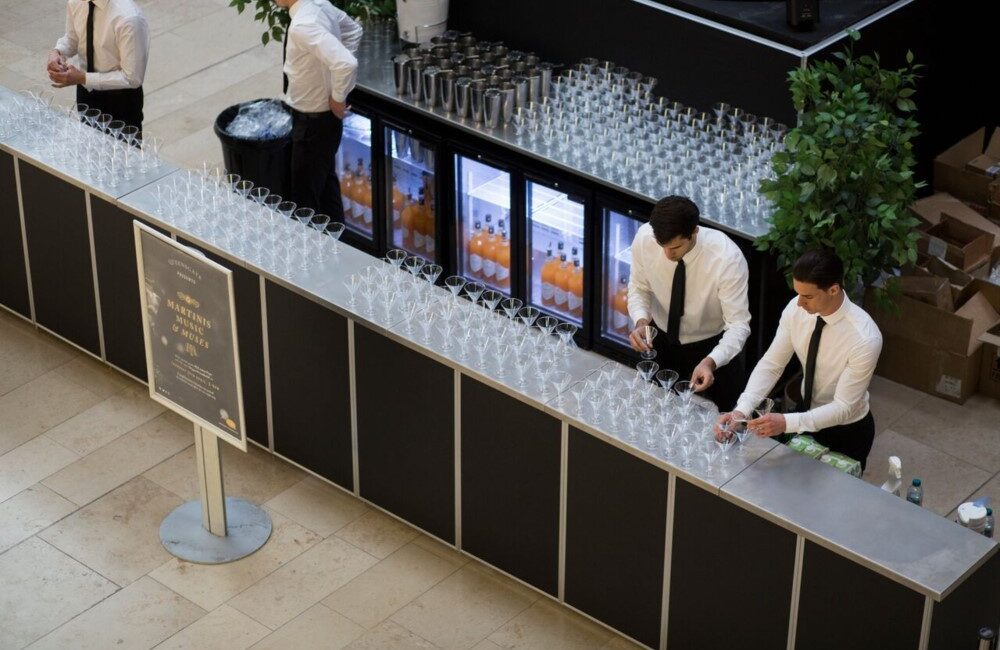
The bar should complement the atmosphere of your wedding. A formal ballroom reception may benefit from an elegant staffed bar with a curated cocktail menu, while an outdoor celebration may work better with a relaxed mobile bar setup.
Think about how you want guests to interact with the bar. Do you want it to be a central social area? Should it blend into the décor? Would you prefer a separate cocktail station during the reception?
The physical design of the bar can also affect the overall flow of the event. A bar placed too far from the reception area may be inconvenient, while a bar positioned in a narrow space can create congestion. Your service provider should be able to offer practical recommendations based on the venue layout.
Pay Attention to Staffing and Service Speed
One of the most important factors in choosing a bar service is staffing. Even a well-designed drinks menu can create frustration if there are not enough bartenders to serve guests efficiently.
Ask potential providers how they determine staffing levels. They should consider guest count, event duration, the number of bars, the complexity of the menu, and the type of drinks being served.
A simple beer-and-wine bar may require fewer staff members than a full cocktail bar with several made-to-order drinks. If every guest must wait several minutes for a cocktail, lines can quickly form during important moments such as cocktail hour or the transition to the reception.
Experienced bartenders also understand how to maintain a smooth service rhythm. They can prepare popular drinks efficiently, keep the bar organized, monitor supplies, and communicate with event coordinators when additional stock is needed.
Ask About Menu Planning and Customization
A quality bar service should be willing to help you create a menu that suits your wedding rather than simply offering a standard package.
Ask about customizing:
- Signature cocktails
- Seasonal drinks
- Local beer or wine
- Mocktails
- Low-alcohol options
- Champagne or sparkling wine
- Specialty garnishes
- Personalized drink menus
For example, a summer wedding may benefit from refreshing cocktails featuring citrus, berries, or herbs. A winter reception might be better suited to warm flavors such as apple, cinnamon, or ginger.
A customized drink menu can also become part of the wedding décor. Printed menus, personalized cocktail names, and coordinated garnishes can make the bar feel like an intentional part of the celebration.
Consider Experience With Weddings Specifically
Bartending experience is valuable, but wedding experience can be especially important. Weddings have unique timing, emotional moments, and logistical demands.
A wedding bartender may need to coordinate with planners, caterers, photographers, venue staff, and the wedding party. They may need to pause service briefly during speeches or ceremonies and then quickly accommodate a rush of guests afterward.
When interviewing a provider, ask how many weddings they have worked and whether they have experience at your venue or with similar events. A team familiar with wedding timelines is often better prepared to handle unexpected changes.
This is where choosing special wedding bartenders can make a meaningful difference. The right professionals understand that the bar is not operating in isolation; it is part of a much larger event with a carefully planned schedule.
Confirm Venue Rules and Legal Requirements
Before booking a bar service, review your venue’s alcohol policies. Some venues require couples to use an approved provider, while others allow outside bartenders but require proof of insurance.
You may also need to confirm:
- Whether outside alcohol is permitted
- Who is responsible for purchasing alcohol
- Whether a liquor license is required
- Whether the venue requires event insurance
- Whether certain beverages are prohibited
- When alcohol service must end
These rules can significantly affect which bar service is suitable for your wedding. Always clarify requirements early, preferably before signing a contract.
Ask About Responsible Service Policies
A professional bar team should have clear procedures for responsible alcohol service. Bartenders should know how to handle guests who appear intoxicated and should understand the importance of not serving minors.
The service should also make water and non-alcoholic beverages easily available. Food service, transportation arrangements, and clear communication with event staff can all support a safer celebration.
Responsible service does not have to feel intrusive. Experienced bartenders can handle these situations discreetly while helping protect the well-being of guests and the smooth flow of the event.
Read Reviews and Request References
Online reviews can reveal useful information about a company’s communication, punctuality, professionalism, and service quality. Look for reviews that mention specific weddings and details about how the team performed.
You can also ask the provider for references or examples of previous events. Photos may help you evaluate the appearance of their bar setups, while testimonials can provide insight into the customer experience.
Pay attention to how quickly the company responds to your questions. Clear communication during the planning stage is often a good indicator of what you can expect on the wedding day.
Get Everything in Writing
Before making your final decision, carefully review the contract. It should clearly outline the services provided, total cost, payment schedule, cancellation policy, service hours, staffing, equipment, alcohol responsibilities, and additional fees.
If something was discussed verbally but does not appear in the contract, ask for it to be added. A clear agreement protects both you and the service provider and helps prevent misunderstandings.
Also ask what happens if your guest count changes. Some providers may adjust staffing or pricing based on the final number of attendees.
Choosing the right bar service for your wedding reception requires more than finding the lowest quote. The best option should fit your guest list, budget, venue, menu preferences, and overall wedding style.
Take time to compare packages, understand what is included, evaluate staffing, and ask detailed questions about setup, service, responsible alcohol handling, and cleanup. A reliable local bar team can also provide valuable insight into the practical details that couples often overlook, especially when it comes to service flow and venue logistics.
As a general planning reminder, wedding alcohol needs can vary considerably depending on the number of guests, event length, location, and type of bar service. Brides summarizes a commonly used planning guideline as “one drink per guest per hour,” while also emphasizing that the estimate should be adjusted based on the specific event.
Ultimately, the right bar service should make your wedding day easier, not more complicated. When the drinks are thoughtfully selected, the staff is prepared, and the service is organized, the bar becomes more than a place to get a beverage. It becomes part of the hospitality, atmosphere, and memorable experience you create for everyone celebrating with you.